

Website
Sydney Harbour Bridgeclimb
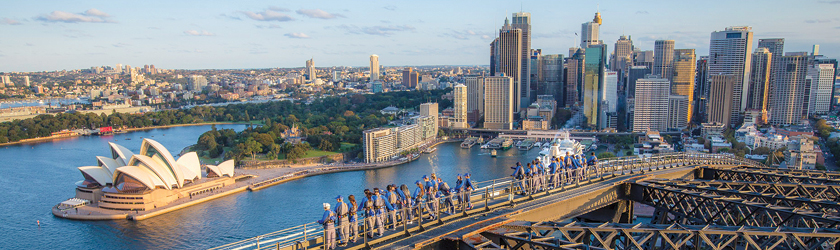
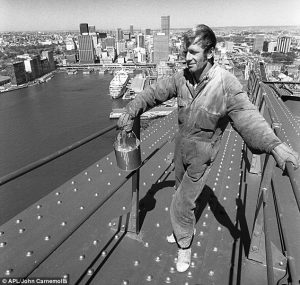
BridgeClimb Sydney is an iconic Australian experience that takes you on a journey to the top of the nation’s most famous and celebrated structure, the Sydney Harbour Bridge. As you ascend to the Summit of the world’s largest steel arch, you’ll experience breath taking moments, spectacular 360-degree views, and fascinating facts from expert Climb Leaders into the engineering and cultural history of this world-famous icon, while keeping you safe and entertained along the way. With every day on the Bridge unique, and each Climb a new exhilarating adventure, everyone will take something different from this unforgettable experience.
Since its launch on 1 October 1998, BridgeClimb has welcomed more than 4 million Climbers, including VIPs and well-known celebrities from around the world, to scale the arches of Australia’s most iconic landmark. The Sydney Harbour Bridge remains the most climbed Bridge globally.
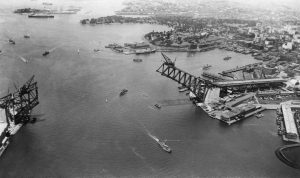
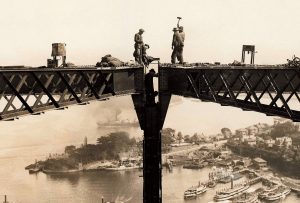

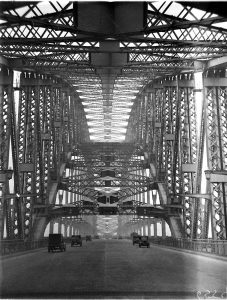
1815 is the earliest known date for proposals to build a bridge between the northern and southern shores of Sydney Harbour, though it wasn’t until after the First World War that the idea was taken more seriously, when Dr JJC Bradfield presented his design to the New South Wales Government. After inviting worldwide tenders for the construction, the contract to build the Sydney Harbour Bridge was officially awarded to English company Dorman Long and Co Pty. Ltd. Dr J.J.C. Bradfield’s design of the arch and pylons was closely based on New York’s Hell Gate Bridge. In terms of steel arch spans, the Sydney Harbour Bridge ranks fifth in the world. However, its reputation as the ‘World’s Greatest Steel Arch’, rests on its combination of span, width and load bearing capacity, as well as the difficulties that needed to be overcome during its construction.
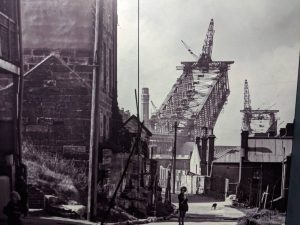
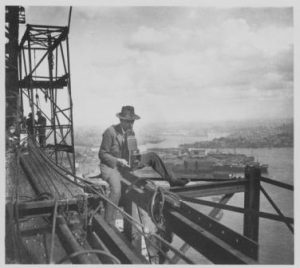
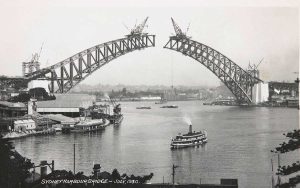
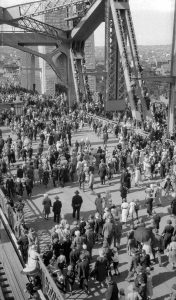
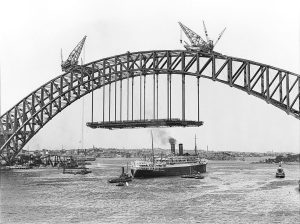
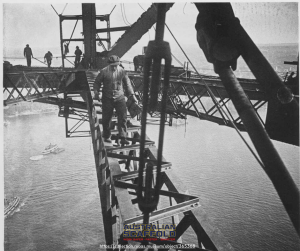
Construction of the Sydney Harbour Bridge began on 28 July 1923, employing 1,400 workers and taking over eight years to build, at a cost of more than £10 million (over $1.5 billion Australian dollars in today’s money!). Approximately six million hand driven rivets and 52,800 tonnes of steel (or 550,000 pieces of individual pieces of steel!) were used to complete the construction, and 272,000 litres of paint were required to give the Bridge its initial three coats ahead of the official opening day on 19 March, 1932.

- Accommodation
 Accommodation
Rydges Darling Square Apartment Hotel
Accommodation
Rydges Darling Square Apartment Hotel

-

No strings attached.
Free to join, membership is like friendship, with benefits.
-

Best rate, always.
Booking direct gets you a guaranteed 10%* discount on our best rates.
-

Feeling perky.
Get instant discounts on stays and dining, plus lots of little extras.
 Turn on notifications and be the first to know when exclusive deals and limited-time offers drop. View privacy policy
Rydges
QT
ATURA
Independent Collection
Lylo

